English starts in a few lines.
J’avais commencé ce texte en français, c’est après tout la langue du ragout, mais vous avez sans doute vos propres souvenirs de ragout et votre façon de famille de le préparer. Donc, désolée, mais par soucis de partager avec d’autres qui n’y ont jamais gouté voici en anglais le …
Ragout de pattes de cochon (et boulettes)
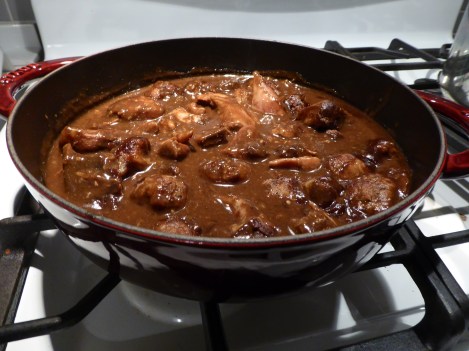
The Larousse Gastronomique defines ragout as « …des préparations à base de viande, de volaille, ou de poisson, coupés en morceaux réguliers, cuites à brun ou à blanc, avec ou sans garniture de légumes. » A very broad definition, yet, talk of ragout to a french canadian and only one image comes to mind: the wonderful ragout de pattes de cochon (you would call them pork hocks, we call them what they are, pigs legs, not the same as pigs feet – that are great in my 3 pork spaghetti sauce but that is another piggy story).
I will pause here for a little aside on the importance of porc in the french canadian diet – pork tourtière (or pork and veal and I will not join the great tourtière debate here), ham, creton, tête en fromage ( or tête fromagée depending on where you are from, in english it is head cheese, I cheat and make mine with a pork hock), boudin, ragout, bouillie, etc …. My mom was a city girl (lower town of Ottawa) but when country relatives butchered a pig it was her job to stir the blood dripping (pouring?) from the carcass to keep it from coagulating so they could make boudin (which I hated as a child but well made boudin is delicious. As a child I thought of it as scab sausage – there was some truth to that but hey I love kidneys, sweetbreads, gizzards, etc. Give them a try at least. I digress, so back to the ragout, in our home, when I was a teenager, it was the New Year’s meal with tourtière but when I was younger, when my mom would cook for my fathers extended family (that also is another story, but briefly I felt so sorry for her, whose birthday was the 26th, that for many years I made her an Easy-bake oven cake that I would bring her as she was doing the dishes at midnight after the Christmas meal) we had turkey, ham, tourtière, ragout. Which is the traditional combo and always accompanied by beets and pickles.
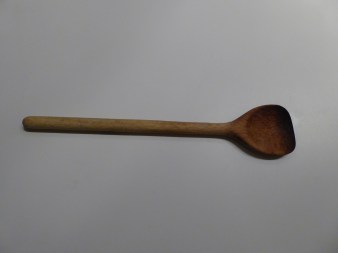
I think of my mom when I cook my ragout. I still use her wooden spoon. Its round end is flattened and dark from the constant stirring required to brown the flour for this dish. The spoon also has a large indentation in its handle from being left on a stove burner – she claimed it left a perfect spot for one of her fingers to rest. My father, whose job is was to get the meat from the hocks once cooked, taught me to cheat and eat some of the small bits as a reward for this somewhat messy job. I also think of my father in law who loved my ragout. I believe I cooked like memories of his mother. My mother-in-law, who had lived with her mother-in-law, never made it (perhaps because she had lived so long with her mother-in-law). My mom always made ragout but many women of her generation, the first that joined the work force en masse, were the first consumers of short-cut cooking. In any case, my father in law, a quiet, somewhat taciturn man, obviously took pleasure in my traditional cooking. I also think of my husband, who revelled in Christmas and loved the house looking its best and smelling of sweet and savory annual treats and of my son who I believe values and will continue the traditions.
I do not follow a book recipe for my ragout and my mom never wrote it down. I left Ottawa for Winnipeg when I was 30 and started cooking it then as I would not be sharing hers. Though I would phone her for instructions it is not a complex recipe but… it is time consuming!
List of ingredients:
9 pounds of pork hocks
2 pounds ground pork
1 to 2 cups of flour
2 onions
1 or two bay leaves
1 branch of celery
Nutmeg
Clove
Thyme
Sage
Poultry seasoning
Salt
Pepper
To start, it is optional, no recipe requires it and my mom did not do it but, I remove the skin from the hocks – I know, it may be sacrilegious but there is plenty of good fat and gelatin from the bones and cartilage (sounds great does it not?) and then fat from the meatballs. You do not need the skin. You can make cracklings out of it if you want.

Put the cleaned hocks in a very big pot and cover with water, one or so inches over the meat – it will concentrate quite a bit over the long cooking and you want your meat to always be covered. Add one of the onions, just cut in two or four, the celery and the bay leaf or leaves – depends on how pungent, fresh they are, you do not want the bay to be overwhelming.
After 20 to 30 minutes you will probably have some solids accumulated on top, remove with a small strainer – I use an old tea strainer, the kind that fits over a cup, maybe 2 and half inches across(?) to scoop out the solids, or you can use a slotted spoon. You can now more or less ignore this pot for 3 to 4 hours – depending on how thick your pieces were – till the meat comes off the bone. But don’t think you can go read a book or do your Christmas cards (you still do Christmas cards don’t you? Sigh, I think I am getting old!). This is a good time for the next step: browning, or roasting your flour. This is the most important step of the entire process!!
Some, like Martin Picard (of Montréal’s Pied de cochon – he knows a thing or two about things pig) do it the lazy way. Picard puts 250 g of flour in a 400-degree oven that he checks and stirs every 5 minutes till it is brown. Well, the fact that he only needs 1 cup for 12 pounds of meat tells me it does not roast appropriately. By roasting or toasting (just like toasting your spices really) you create the flavour but also remove most of its ability to thicken the broth, I use 1 and half cups or more. It depends on how much broth you have. (the oven method may be just fine, it is just not traditional for me. So, as it is not part of your tradition, go ahead and use this ‘shortcut’ if you want – just make sure to check and stir every five minutes).
What I do is put up to 2 cups (just in case it is needed) in a dry, heated cast iron pan. With pan on low, stir, continuously, till your flour is the colour of cocoa, not brown sugar, cocoa, it takes a while – an hour or so – but it is worth it, it brings a depth of flavour that makes this dish.


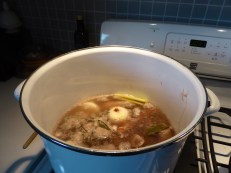
After your flour is browned, it is time for the meat balls (your pork hocks are still happily simmering away next to you all this time, it smells great!)
Finely dice the onions, put in bowl and add salt, pepper, a touch of nutmeg, a pinch of cloves, at least of teaspoon of thyme, sage and poultry seasoning (I know you already have put the same spices as you find in poultry seasoning mix in already but I do it anyways, you don’t have to if you do not have it on hand – it was just something that we always had in our kitchen). Smell your onion and spice mixture, add more thyme and sage or spices if the smell does not call out to you. Add the meat. You can put an egg to help bind the meatballs but I don’t. I like the meatballs kind of loose. Though it makes them harder to shape, it lets them get impregnated with broth and later, with the sauce. 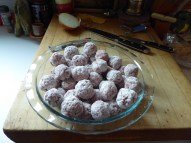 Make meatballs, about 1 tablespoon in size (please don’t measure them – it is just important that they are not too big and that they are all more or less the same size – about 2 bites per meatball) roll them in flour, shaking off the excess. Set aside.
By this time your hocks should be done, remove them and put them in a large plate or cookie sheet for them to cool. Keep the broth at a simmer.
 Brown your meatballs (in the pan you used for your flour – you have now added some olive oil to keep the meatballs from sticking) and when nice and firm and golden put them in the broth. Don’t play with them – they will fall apart if you try to move or turn them before they are nicely sealed. If they move easily when you nudge them, you can turn them and/or put them in the broth as they are ready. They will only need 30 minutes to simmer in the broth at most. Test one after 20 minutes. Remove them and then take some of the fat off the top – not all of it – that is where much of the flavour is concentrated!


The hocks should now be cool enough to handle so take the meat off the bone – many don’t, and serve a hock as they would a lamb shank but generally the hocks are way too big for one person and it is much easier for your guests to eat lovely morsels of meat without digging into the bones. That being said, you should make sure to remove all the meat, you will have to get in there and look everywhere between the joints, you will find many tasty bits!
Now the best part, you can strain the broth at this point but I don’t think it is necessary. (Oh I made sure there were no little bones at the cut ends of the hocks before I cooked them – if you did not do this you might want to strain your broth (not with a tea strainer this time!).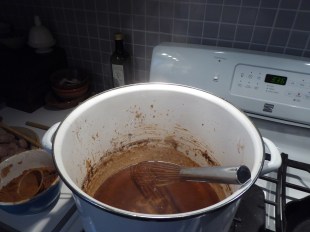
You will do one of two things. Either mix some broth into a small bowl of your browned flour and mix it well before returning to the rest of the broth (start with one cup of flour and add more after if sauce is not dark enough), or gradually and gently sprinkle the browned flour over the broth and whisk. In both cases you should have a lovely dark and smooth sauce. Simmer for 10 minutes then add all the meat.
Reheat and simmer another 20 or 30 minutes, thereby making sure that the taste permeates the meat.
Voilà! You are done! Serve with boiled, steamed or mashed potatoes, beets (I do a raw beet salad) and pickles.
Freezes very well – you will have enough for at least 8 servings or more if you are serving with tourtière.
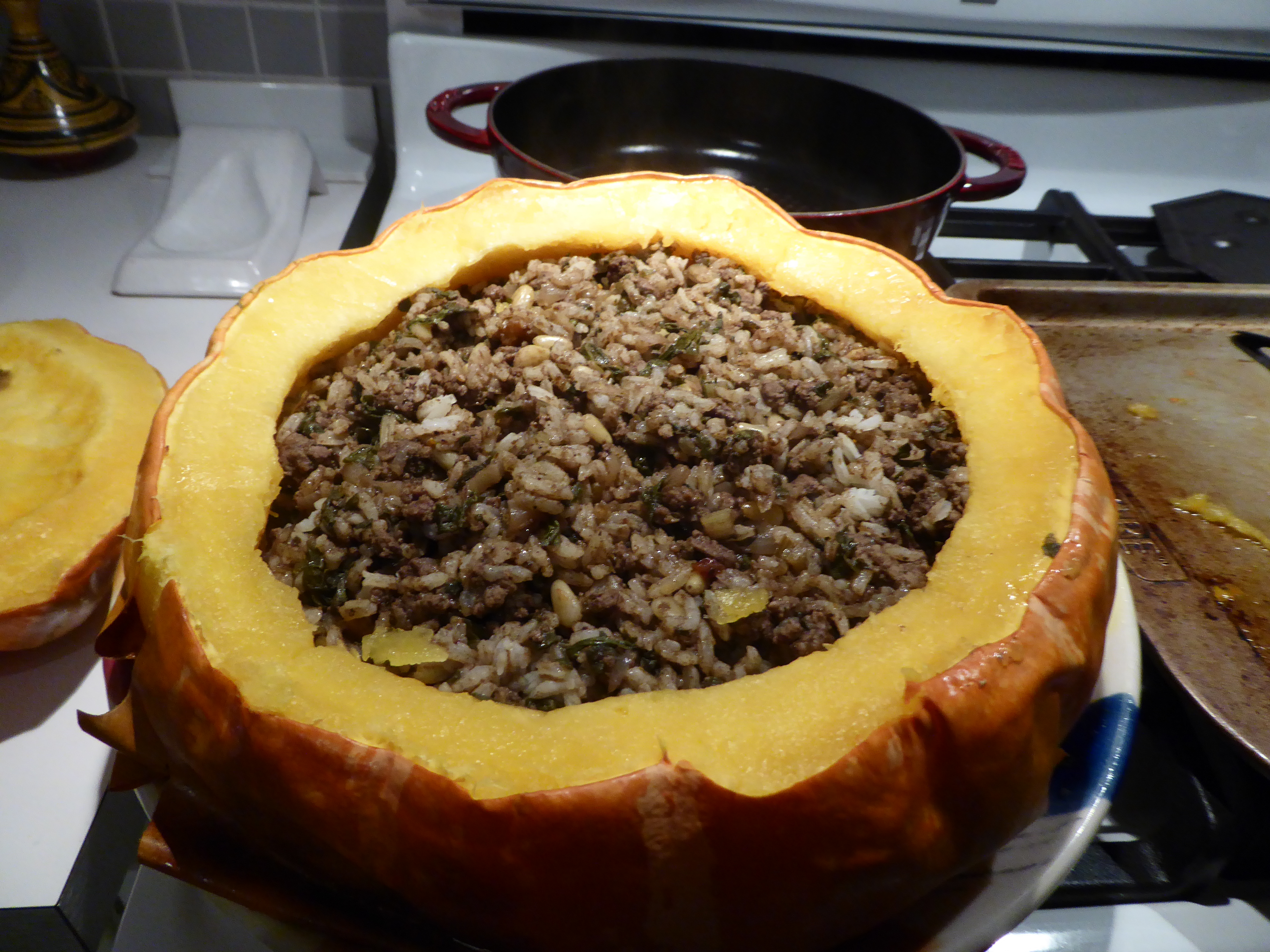
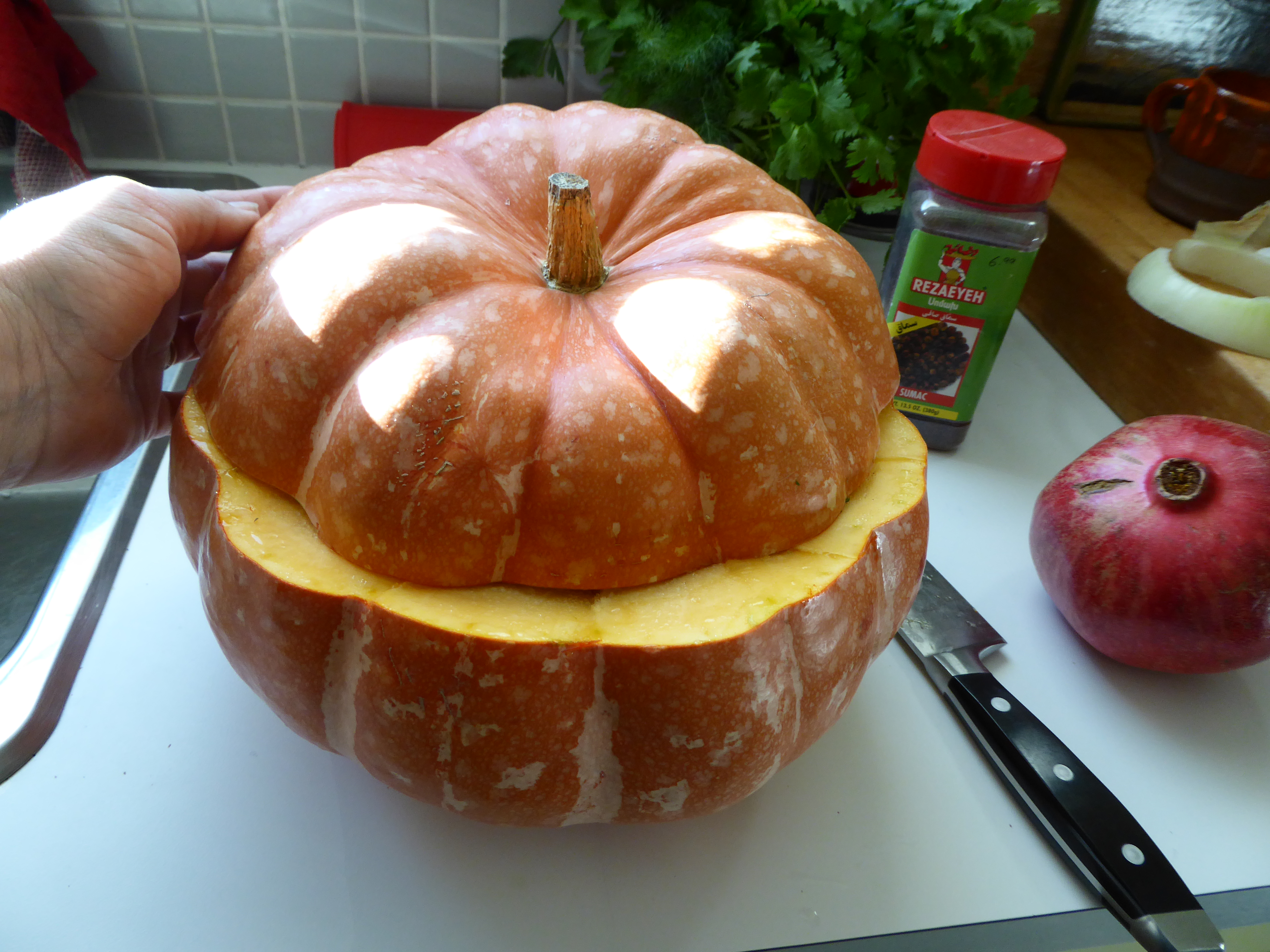
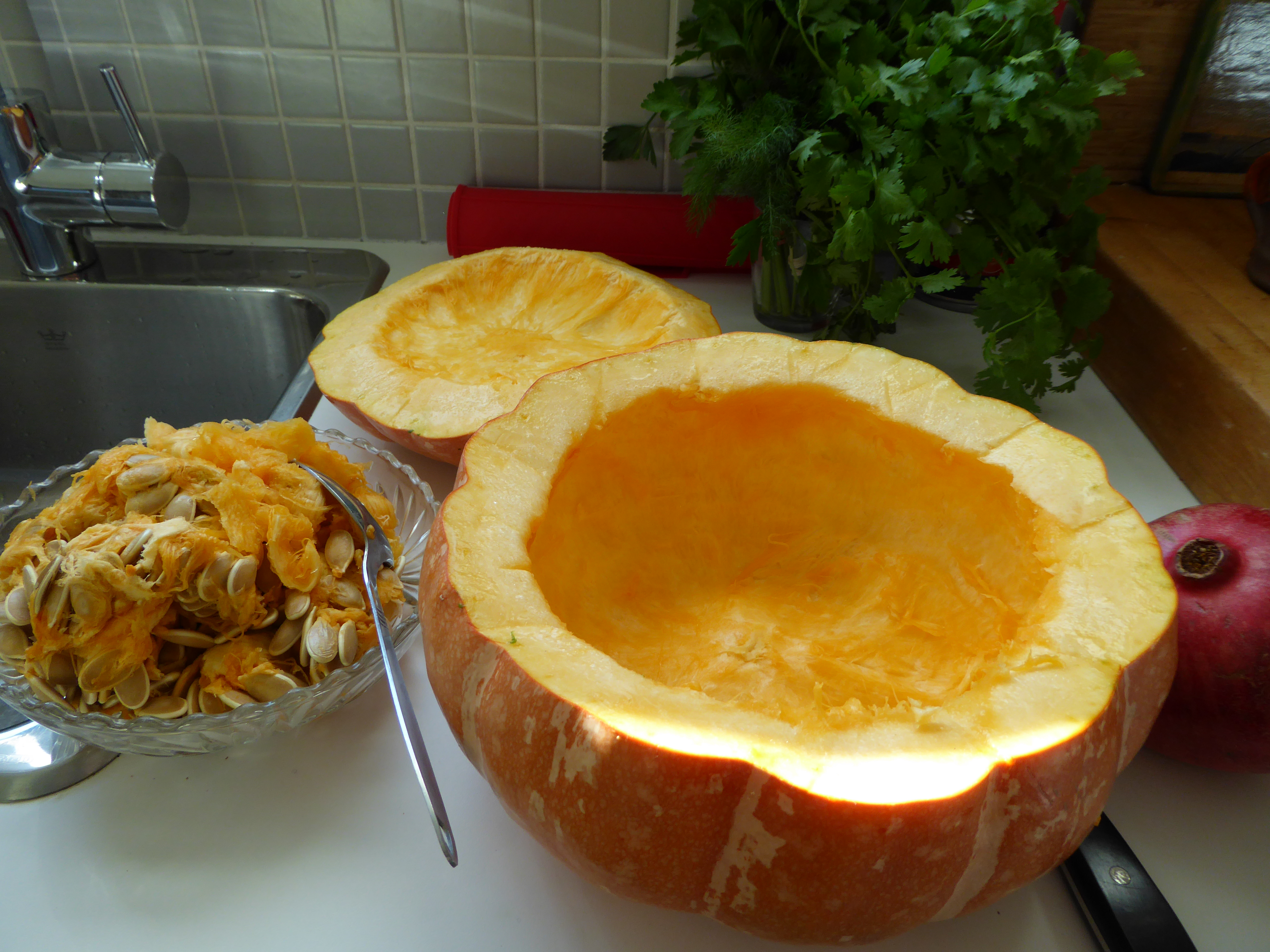
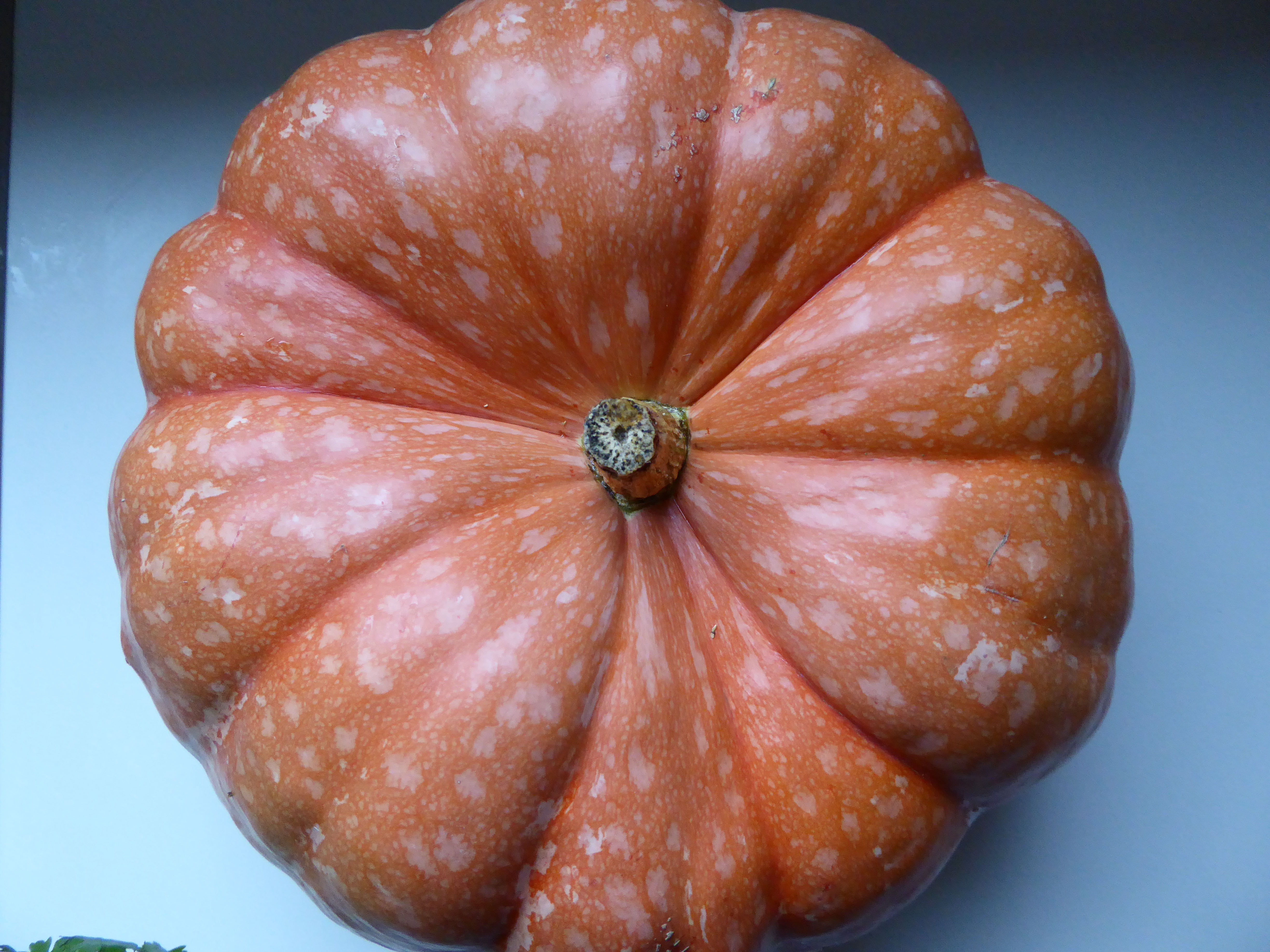
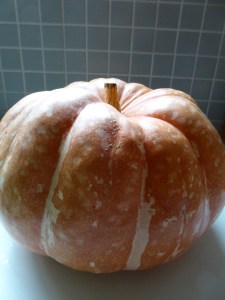 Stuffed pumpkin, inspired by Levantine flavors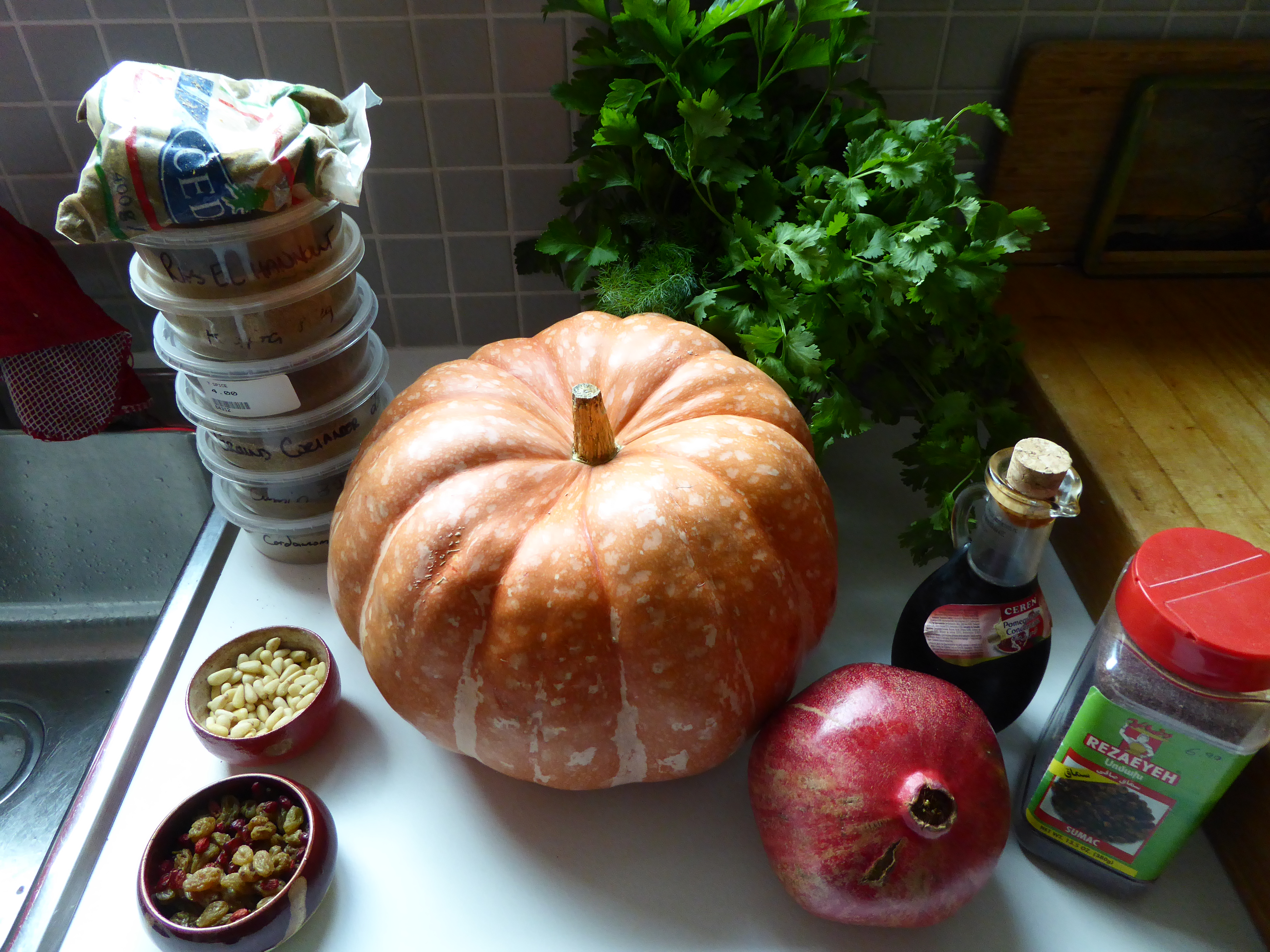

 Andrée Chénier - moments